Want to cook latkes like the reigning champions of the Congregation Shir Tikvah Latke Cookoff (2012)? Just follow these instructions an amaze yourself!
- 10 medium russet potatoes (about 4 pounds)
- 2 medium yellow onions
- 3 large or extra large eggs
- 1/4 cup flour
- salt and white pepper to taste
- plenty of vegetable oil
First things first: If you have never fried latkes before, you need to know that, while they are delicious to eat, cooking them can make your house smell like oil and onions. For days. Take a few minutes before you start to make sure that nobody’s coat is hanging in the kitchen (unless you want to wash it), that closet doors are closed, and that you are wearing clothes that can be easily laundered. Also, be prepared for a thorough clean-up afterward.
OK, now you’re ready: Wash potatoes thoroughly.
Beat the eggs in a large mixing bowl.
Line a medium-sized mixing bowl with cheesecloth.
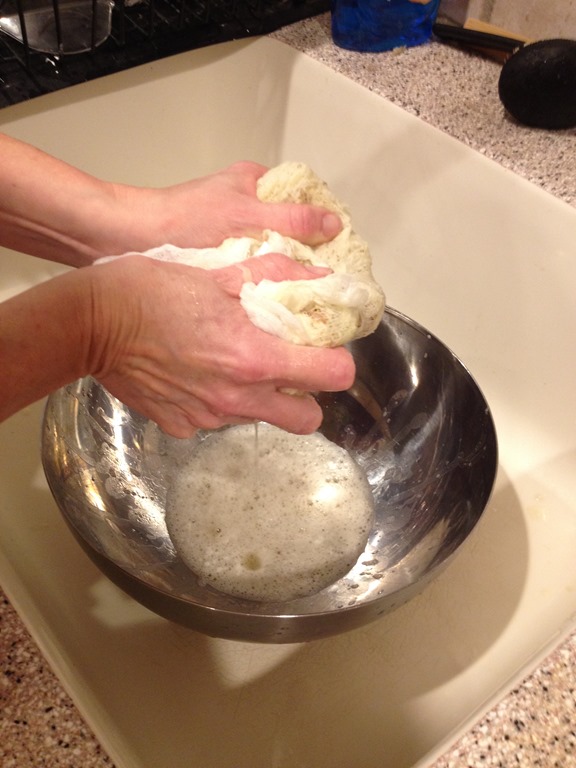
Using the grating blade of a food processor or a hand grater, grate potatoes and onions. It’s helpful to alternate them for easier mixing later. After you have grated a food-processor-bowlful, transfer grated potatoes/onions to the cheesecloth-lined bowl. Gather the cheesecloth up into a bundle. Twist the top to form a ball. Squeeze as much liquid as you can from the potato/onion mixture.
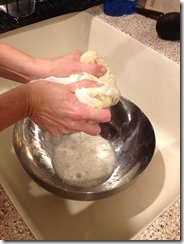
When no more liquid comes out, remove from cheesecloth and transfer to large bowl with eggs. Repeat with remaining onions and potatoes until all have been grated and squeezed. You may need to replace the cheesecloth.
Combine eggs with potato/onion mixture. It may be easiest to use your hands here.
Sprinkle flour, salt and pepper over egg/potato mixture. Mix thoroughly to combine all ingredients.
Heat 1/2 – 3/4” of vegetable oil in a large skillet. We use an electric skillet set at 350 degrees, but a good skillet on the stove will do as well. Our standard electric skillet uses about 22 ounces of oil per recipe. Drop a piece of potato into the oil. When it sizzles, the oil is ready.
Form potato mixture into patties and carefully place in oil. Fry to desired brownness, turn over and fry the other side. If you are going to be freezing the latkes, it’s a good idea to under-cook them a little, as they will get browner when they are reheated later.
Repeat until all of the batter is used up. No need to change oil between batches.
Transfer cooked latkes onto a plate lined with several layers of paper towel to drain. If serving right away, transfer to a serving plate and enjoy! They are delicious served with applesauce and/or sour cream on the side.
Freezing instructions: Line two cookie sheets with paper towel. Set a cooling rack over each cookie sheet. When the latkes on the plate are cool enough to handle, transfer them to one of the racks. When they have cooled completely, transfer them to parchment-lined cookie sheets. It is OK to place two layers on a sheet, with parchment in between the layers. Cover tightly with aluminum foil and place them in the freezer. If you do not wish to store them on cookie sheets, they can be transferred to freezer bags or other containers once they are frozen solid. When it’s time to reheat, remove the foil, place latkes on a cookie sheet (if they aren’t already on one), let them sit out while you heat the oven to 450 degrees, then bake for 8 minutes or so until hot and brown.
NOTE: Latkes do not keep very well in the refrigerator. If you are going to hang on to them, it’s best to freeze them.
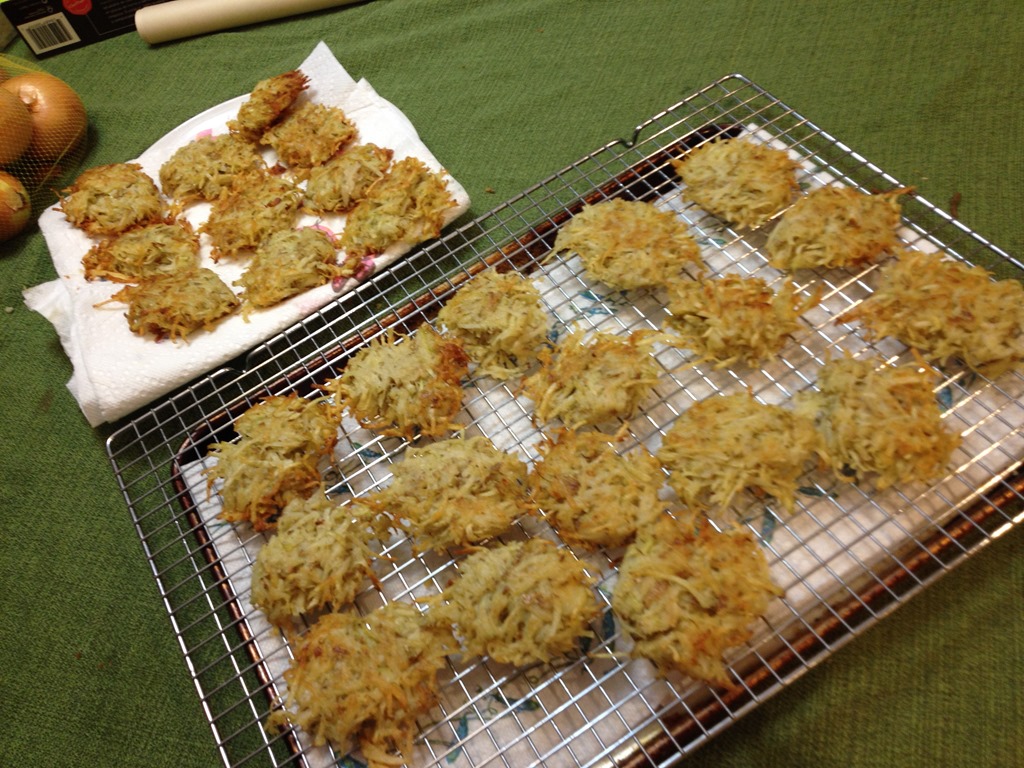
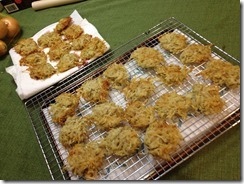 Here are some latkes getting ready for the freezer. Note that they are slightly under-cooked.
Makes about 25 latkes.
I don’t recommend doubling the recipe, as it becomes difficult to handle and keep the potatoes in good shape. If you need more than 25 latkes, make additional recipes from the beginning, starting with fresh oil each time.
 Rehfwitz Recipes